

Just What Does It Mean To Love Your Nation?
On our 250th birthday, the question is harder than ever to answer
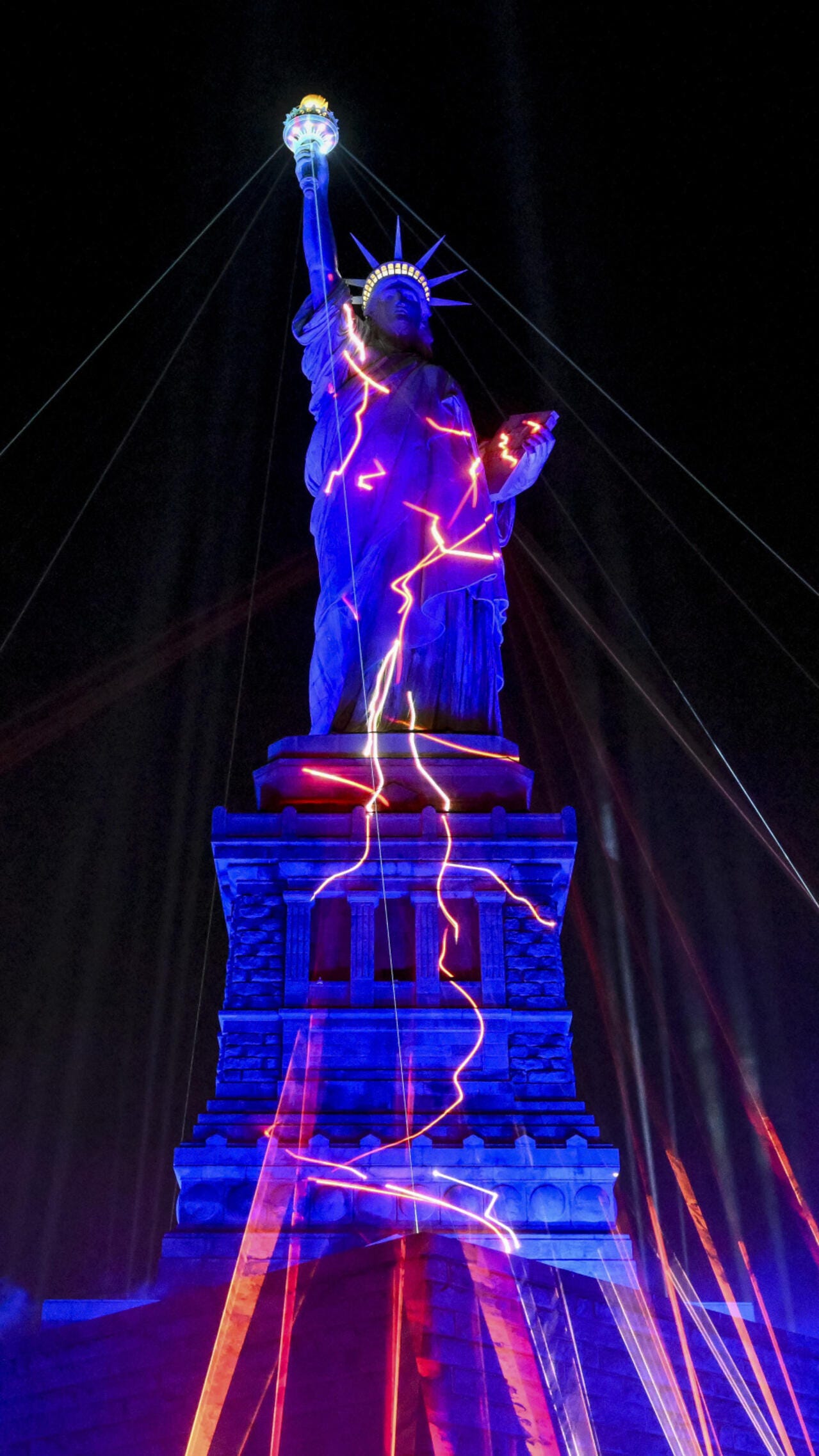
Last night at 11 pm Eastern Daylight Time, ABC began airing twenty-four hours of programming dedicated to America at 250, beginning with a laser show at the Statue of Liberty in New York. As I noted on my Bluesky account earlier today, it has been surprisingly informative, inclusive, and unflinching about darker aspects of our past. Working in tandem with National Geographic, covering current and historical stories from each of the 50 states, viewers so far have seen everything from a day in the life of an Iowa farmer to the story of a slave rebellion and its brutal suppression outside New Orleans. Another story followed one of Thomas Jefferson’s descendants through Sally Hemings and his deep emotion at being recognized by Monticello as a descendant, with the access and privileges the estate grants all descendants.
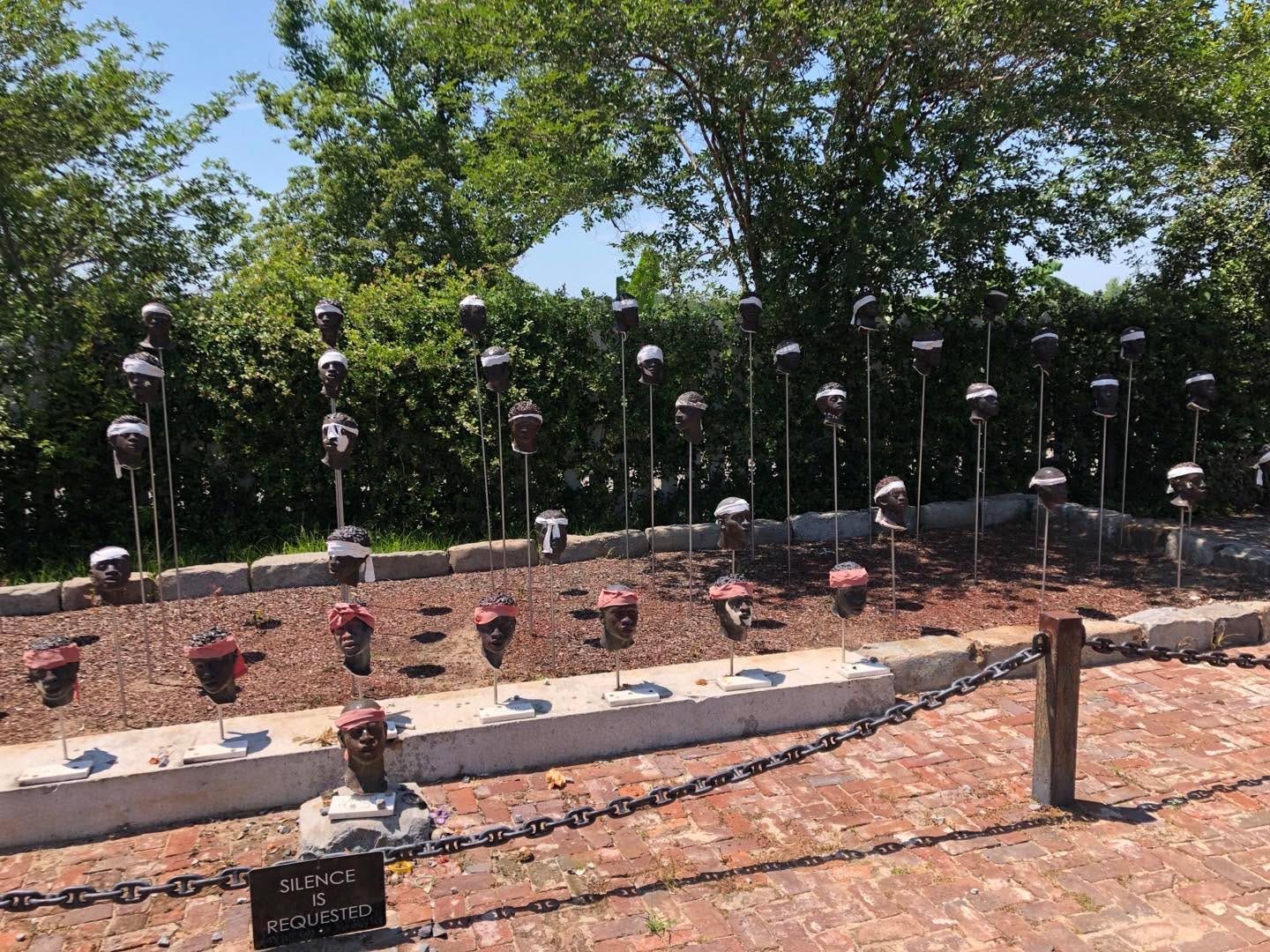
Native Americans have been centered throughout many of the stories, serving as guides through archaeological digs, national forests, the Appalachian Mountains, the Grand Canyon, and the swamps of the Everglades, all while being recognized repeatedly as the original stewards of this land. While it does not delve into the thornier discussion about “stolen land,” it is absolutely remarkable after all of the bruising fights that Disney and ABC have gone through with the Trump administration that they chose to take a pretty bold stand in this programming. While the Trump administration has been ordering the National Park Service to remove any mention of slavery from historic sites across America, Disney and ABC chose to confront it as part of our history, a brave stance in a media world increasingly run by sycophantic billionaires desperate to keep control of our economy and nation. They showed the German Coast slave revolt memorial in all of its gruesome imagery, which truly impressed me.
My wife and I watched for several hours today, and she asked me a question after reading some of the wretched drivel that Trump spoke at Mount Rushmore this week. He claimed “Communism is a mortal threat to American liberty. It is the greatest threat to our country, including World War I, World War II, Pearl Harbor or even 9/11….There is now a resurgence of the communist menace in our land, including from newcomers to our country who embrace ideas totally opposed to our way of life and our great success. You can be a communist, or you can be a patriot. You cannot be both.”
Having watched right-wing politicians define communism in the last couple of decades when asked to do so—a painful exercise in historical illiteracy—I can confidently say that he would include every Democratic Party official, voter, and activist in that assessment, not to mention so many others who sit further left. It is the broad brush tarring of people like myself that turns people off from patriotism, especially from those who would qualify for Dr. Samuel Johnson’s 1775 assessment that “patriotism is the last refuge of a scoundrel.” It’s this experience that has led a very strong segment of Americans to argue in recent surveys that flying our flag is a sign of being a zealot, and not a symbol of unity.
I’m guilty of this thinking myself. I’ve often said in conversations, social media posts, et cetera that I really do not like America, or that I hate it, even. Those things get spoken by me when I’m at my most upset over the gung-ho, rah-rah, militaristic patriotism that is so often thrown in our faces by certain segments of our population. I think that I’ve done so as an exercise in hyperbole, or a reflex against behavior that I loathe. There are few nations on Earth that can claim a long, unbroken record of pacifism and good behavior towards others. The history of most nations, if you look back long enough or hard enough, includes periods of bloodshed and warfare and oppression. The North American continent is largely land that was stolen and seized by colonialist settlers from another hemisphere. South America, where the native peoples eventually seized control of their destinies, has very notable recent history where those leaders oppressed their own people or launched wars against others. Innocence in statecraft is exceedingly rare, and nations are an outgrowth of our innate tribalism. Unless I moved to Samoa or Tahiti or a place like that, I would inevitably be part of a nation that has ugly history behind it.
The more complicated truth is that I have struggled with this question a lot in the past two decades—as our nation turned into an imperial danger to others, claiming jurisdiction to strike against “terrorist threats” with our military anywhere we saw fit, and as I learned the darker parts of our history, parts that were far closer to the present day than politicians and media figures implied. In 2008, I thought we had made it through to a new day in America. We elected, in the midst of our Brown Scare against Scary Names and Dark People, a man named Barack Hussein Obama as our President. A charismatic, biracial, incredibly intelligent man who was a perfect illustration of the American Dream and succeeding on merit should’ve been our finest hour, and yet it took mere weeks for an internal backlash driven by hate and latent racism to take center stage. Nearly twenty years later, that backlash has brought on full-blown war against the civil rights of dark-skinned Americans and immigrants. The Voting Rights Act has been overturned by a Supreme Court stacked with five white conservatives (and the Black Klansman Clarence Thomas) eager to dial back the clock, no matter what the facts, actual law, or stare decisis says. Within an hour of that decision, Southern states began removing Black-majority congressional districts and destroying their representation in Congress.
How do I love this nation? How do I have any pride in my nation when the past decade has been a primal scream of hate, anger, division, repression and downright evil behavior by many of our leaders and far too many citizens? How do I take pride in a nation that has the most wealth on Earth while also refusing to provide basics that every other major economic power does? How can I cheer on our athletes in international competition when our government has actively sabotaged the efforts of other nations in those competitions by putting them through harassment and abuse before matches? Where does someone draw the line between supporting fellow citizens and unintentionally boosting the bad faith message of our government?
It may be true that other nations have dark sides or horrific behavior in their pasts, but it cannot be denied that right now, it is our nation amongst the worst offenders. We are at the furthest point from our ideals in decades, if not longer. If the Nazis took back Germany tomorrow, there’s a 50% chance America would join a war on their side, given our government’s ideological bent. It sticks in my heart, even as I watch our football (soccer) team advance in the tournament and cheer on their efforts. It’s a nagging guilt that I can’t get to go away—just what am I supporting? Where does the individual end and the greater Volk, to use the German, begin? If a nation is a collection of people united in common purpose with defined boundaries, are we even a nation at this point? America feels more like a bunch of gangs fighting on a playground than a cohesive unit, unable to even agree on basic principles like our kids should not be slaughtered in school by assault rifles.
Another school of thought is that dissent is the highest form of love. German revolutionary Carl Schurz, who immigrated to America after the failed 1848 uprisings across Europe, assimilated wonderfully—becoming our ambassador to Spain under Lincoln, Senator from Missouri after the Civil War, and a cabinet secretary to President Rutherford B. Hayes. Schurz wrote, “My country, if right, to be kept right; and if wrong, to be set right.” New York City mayor Zohran Mamdani gave a speech yesterday where he said, “…Patriotism has never been about pretending our nation is without flaws. Patriotism is every act of righteous dissent, it is every march led under the heavy sun, it is every protest held a decade before its time.” If that is the case, then I am a patriot of the highest order, dissenting against our sins for 25 years, even at times where it was most dangerous. I am, to this day, still extremely proud of my words for an opinion column at the University of Michigan’s Dearborn campus newspaper, The Michigan Journal, in the weeks after 9/11 when our civil liberties were being infringed upon quite heavily and the chorus of voices demanding we accept it was the loudest.
I wrote that depriving anyone of civil rights, let alone throwing “terrorist suspects” into Guantanamo Bay without any due process, is not the America that so many fought and died for. It was a sentiment that was difficult to find, and I am proud that I wrote it, proud that I took a stand, and proud that I’ve always stuck by it. Perhaps that is the greatest love of country and I’ve been unable to accept that because it feels so unreciprocated. Love is supposed to be shared, a feeling that is mutual, even though it so often is not.
I’ve written all this today and the funny thing is that I’m still not able to answer my question. I still do not know how to say I love my nation or I do not, because it’s not a question with a binary answer. I love the great natural beauty of America, I love how there are so many culinary experiences from other lands available here, and how we’ve readily taken to so many of them. I love that we have, at times, done the right thing by our own people, and by oppressed peoples elsewhere. I love that some of the greatest expressions of human freedom were written by Americans—Thomas Jefferson, Thomas Paine, Abraham Lincoln, Frederick Douglas, W.E.B. DuBois, James Baldwin, Martin Luther King Jr.—and that those writings still inspire today.
There is much to love here in America, even as there is so much to loathe at the same time. Maybe the true love of country is being able to speak about both with equal passion, and fight to preserve what is good while working to correct what is wrong. It’s upon all of us to do so with grace and respect, hard as that may be, if we wish to live up to the lofty ideals of 1776.